
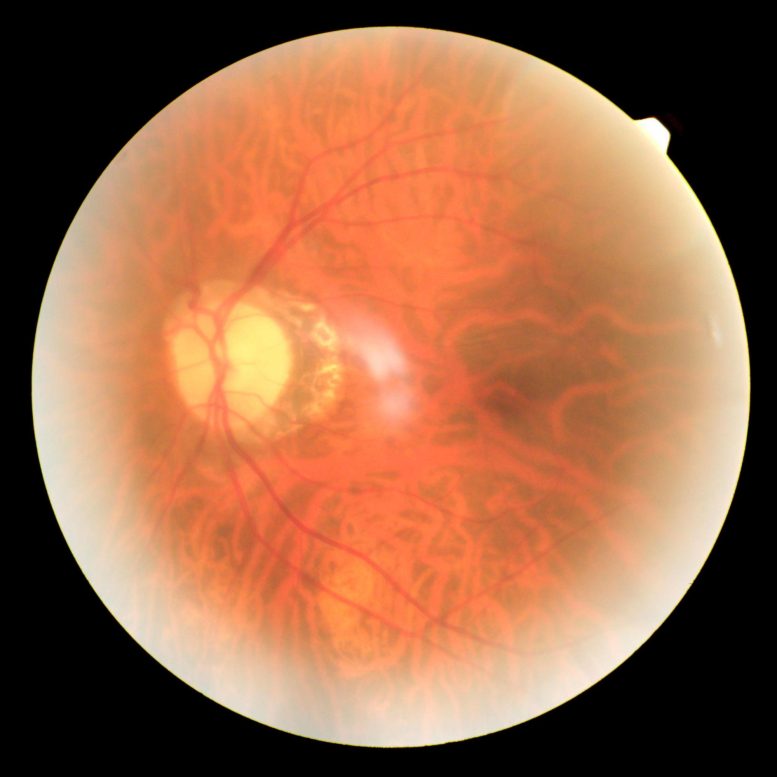
Low glucose spikes worsen diabetic eye disease by inducing HIF-1α protein and abnormal vessel growth. Stabilizing blood sugar could protect vision and guide new treatments.
Individuals with diabetes who go through episodes of low blood sugar, a common issue for those inexperienced in managing their blood sugar levels, are more susceptible to a worsening of diabetic eye disease. According to researchers at Johns Hopkins Medicine, they have found a connection between these low blood sugar levels and a molecular pathway that is activated in oxygen-starved cells in the eye.
The study, which was published in the journal Cell Reports, involved human and mouse eye cells and whole retinas grown in a laboratory environment with low sugar (low glucose), as well as mice with low glucose levels.
“Temporary episodes of low glucose happen once or twice a day in people with insulin-dependent diabetes and often among people newly diagnosed with the condition,” says Akrit Sodhi, M.D., Ph.D., the Branna and Irving Sisenwein Professor of Ophthalmology at the Wilmer Eye Institute at Johns Hopkins Medicine. Low glucose levels can also occur during sleep in people with non-insulin-dependent diabetes. “Our results show that these periodic low glucose levels cause an increase in certain retinal cell proteins, resulting in an overgrowth of blood vessels and worsening diabetic eye disease,” adds Sodhi.
Eye disease among people with diabetes is among the most preventable causes of blindness in the U.S. Diabetic retinopathy, which occurs in up to a third of people with diabetes, is characterized by the overgrowth of abnormal blood vessels in the retina.
Sodhi says the current study suggests that people with diabetic retinopathy may be particularly vulnerable to periods of low glucose, and keeping glucose levels stable should be an important part of glucose control.
Protein-Level Changes in Retinal Cells Due to Low Glucose
For the study, the researchers analyzed protein levels in human and mouse retinal cells and intact retinas grown in an environment of low glucose in the laboratory, as well as in mice that had occasional low blood sugar.
The investigators found that low glucose levels in human and mouse retinal cells caused a cascade of molecular changes that can lead to blood vessel overgrowth. First, the researchers saw that low glucose caused a decrease in retinal cells’ ability to break down glucose for energy.
When the researchers looked specifically at so-called Müller glial cells, which are supportive cells for neurons in the retina and rely primarily on glucose for energy production, they found that the cells increased the expression of the GLUT1 gene, which makes a protein that transports glucose into cells.
Hypoxia-Inducible Factor (HIF)-1α and Blood Vessel Overgrowth
The researchers found that, in response to low glucose, the cells increased levels of a transcription factor, called hypoxia-inducible factor (HIF)-1α. This turned on the cellular machinery — including GLUT1 — needed to improve their ability to utilize available glucose, preserving the limited oxygen available for energy production by retinal neurons.
However, in low-oxygen environments, as occurs in the retinas of patients with diabetic eye disease, this normal, physiologic response to low glucose triggered a flood of HIF-1α protein into the cells’ nucleus, the cell’s control center.
This resulted in an increase in the production of proteins such as VEGF and ANGPTL4, which cause the growth of abnormal, leaky blood vessels — the key culprit of vision loss in people with diabetic eye disease.
The researchers plan to study whether low glucose levels in people with diabetes may impact similar molecular pathways in other organs, such as the kidney and brain.
Sodhi says the HIF-1α pathway may serve as an effective target for developing new treatments for diabetic eye disease.
Reference: “HIF-1α accumulation in response to transient hypoglycemia may worsen diabetic eye disease” by Chuanyu Guo, Monika Deshpande, Yueqi Niu, Isha Kachwala, Miguel Flores-Bellver, Haley Megarity, Taylor Nuse, Savalan Babapoor-Farrokhran, Michael Ramada, Jaron Sanchez, Neelay Inamdar, Thomas V. Johnson, Maria Valeria Canto-Soler, Silvia Montaner and Akrit Sodhi, 10 January 2023, Cell Reports.
DOI: 10.1016/j.celrep.2022.111976
Sodhi is a co-founder of and holds equity in HIF Therapeutics Inc. This arrangement has been reviewed and approved by The Johns Hopkins University in accordance with its conflict of interest policies.
The study was funded by the National Institutes of Health’s National Eye Institute, Research to Prevent Blindness, the CellSight Development Fundk, the Doni Solich Family Chair in Ocular Stem Cell Research, and the Branna and Irving Sisenwein Professorship in Ophthalmology.
Never miss a breakthrough: Join the SciTechDaily newsletter.
Follow us on Google and Google News.